

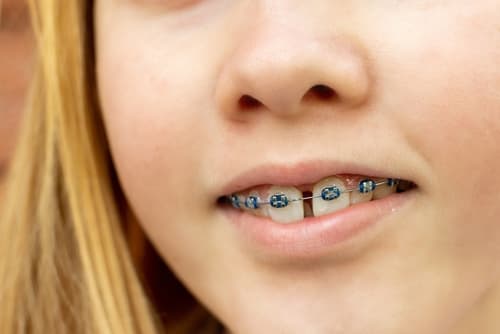
A common question orthodontists hear from patients is, “Why are there gaps between my teeth?” If your orthodontic treatment didn’t begin because of gaps in your smile, you are likely to experience dental gaps as the braces process continues, and there are many possible reasons why.
Gaps Are Part of the Orthodontic Process
Conventional metal braces for teens that use brackets and wires make the orthodontic process visible. You can see that teeth are shifting, and sometimes they reveal unexpected gaps. If teeth are supposed to be perfectly aligned, doesn’t that mean no gaps? Not necessarily. The orthodontic process goes like this:
- Metal brackets are bonded to the front of each tooth.
- The brackets are joined with a thin archwire.
- Brackets and wires work together to put pressure on teeth and move them.
As this work happens slowly and consistently over weeks and months, gaps are likely to form as part of the alignment. This change is normal, especially for patients with overcrowded teeth.
Dental Gaps Can Combat Overcrowding
For many braces-wearers, phase one orthodontics came first in the form of a palatal expander. This appliance opens the upper palate and creates room for adult teeth to erupt so they don’t erupt in the wrong place or require extensive orthodontia in later years.
Wearing an expander is likely the first experience a child with crowded teeth has with tooth gaps. During this process, a handful of brackets are applied to teeth to close the gaps and adjust alignment. Then, it’s only a matter of time for the rest of the adult teeth to appear and pave the way for full braces.
Functional and Cosmetic Smile Perfection
Why the need for more gaps with braces, especially for a patient who has worn an expander? Alignment needs to occur completely to make all adult teeth line up flawlessly. There are other factors that affect how noticeable gaps between teeth are when you’re wearing braces:
- Overcrowding is still a factor and needs to be corrected.
- Size and shape of teeth impact appearance of dental gaps.
- Gum tissue may take on temporary new positions as teeth shift.
Gaps between your teeth when you’re wearing braces are normal, intentional adjustments. They are temporary and will close as treatment progresses, ensuring that all is right with your smile above and below the gumline.
Gaps Are All Good
Braces-wearers see their orthodontist every six to eight weeks for check-ups and adjustments and the changing of archwires and rubber bands. Every appointment is intended to get you closer to a flawlessly aligned smile, and sometimes things get silly along the way with dental gaps or elastics for bite adjustment.
For the few patients who have remaining gaps after orthodontic treatment, this rare side effect occurs because a tooth is small or flawed. Simple, non-invasive treatments like dental bonding or tooth contouring can help deliver perfection. Gaps, of course, will stay away when you wear your retainer nightly as instructed to keep those newly aligned teeth in place permanently.
If you need help embracing the braces process, talk to your orthodontic team at Soleil Orthodontics in Woodinville, WA. Contact us to schedule an appointment.
